Chris Schlesinger
EMT
Free
Safety Instructor Expert
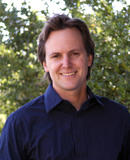
Chris Schlesinger Quick Facts
- Main Areas
- CPR, BLS, AED, first aid and pediatric first aid
- Career Focus
- Safety Instructor
- Affiliation
- American Heart Association, American Red Cross
Chris Schlesinger is a safety instructor for the American Heart Association and American Red Cross, teaching classes in CPR, BLS, AED, first aid and pediatric first aid throughout the San Francisco Bay Area. He writes safety articles on many topics, including responding to heart attacks, strokes, choking emergencies and seizers. He is also a certified EMT.
Articles by this expert
SelfGrowth articles and saved writing connected to this expert.
Article
Controlling and Treating Bleeding
The recommended approach for controlling bleeding is not complicated. In fact, it has has been simplified over the years. In the past, there was instruction in elevating the bleeding area and the use of pressure points. Both of those approaches have been dropped from the first aid classes of the American Red Cross and the American Heart Association. The key thing to remember for controlling bleeding is to apply pressure to the wound. Step-by-Step Approach for Controlling and Treating Bleeding:
Recently added
Article
New 2010 CPR Guidelines: American Heart Association and American Red Cross
In 2010 the American Heart Association (AHA) and the American Red Cross (ARC) adopted new CPR guidelines. This article examines the similarities and differences between both organizations’ CPR guidelines. ADULT CPR What follows is my paraphrasing of the AHA and ARC’s Adult CPR guidelines. They are meant as a point of comparison for this article, not to be taken as either organizations’ stated guidelines. Visit the AHA and ARC websites or buy their course manuals to compare their nomenclature and exact guidelines. American Heart Association
Recently added
Article
Infant and Child Choking: Most Common Causes
In the United States about 3,000 people choke to death each year. However, infants and children account for most of those deaths. Approximately 80 percent of all emergency calls for choking are for victims under six years old, with many of the victims being two years old or younger. These are scary statistics for any parent. It’s important to remember that infants and children have small airways, a natural curiosity about putting objects in their mouths, and their chewing is often incomplete.
Recently added
Article
How To Treat A Bu
Most burns are not medical emergencies and can be treated easily. Burns that cause the skin to be red, painful and swell are called superficial burns. Usually they are caused by heat, such as fire, steam, hot surfaces or a hot liquid. The treatment for superficial burns caused by heat: 1) Stop the burning! Get the person away from the source of the burn. 2) Use plenty of cold running water to help control pain. 3) Cover the burn loosely with sterile dressing. This is not like bandaging for bleeding – keep it loose.
Recently added
Article
Choosing The Right CPR Certification Class
You’ve learned you need a CPR certification. However, you aren’t sure which one you need. And you don’t know if a certification from the American Heart Association, American Red Cross or another organization is the right choice. If you are frustrated, that is understandable — choosing the right CPR certification class can be very confusing! Here are the four questions to ask yourself to ensure that you sign up for the right CPR certification class: Which CPR certification do I need: standard or healthcare provider? Do I need an AED certification as well?r
Recently added
Article
CPR Classes For San Francisco Bay Area Parents: Choosing The Right One
If you’re pregnant or recently given birth, you’re well aware that baby safety involves learning many new skills. One of those skills is how to do infant and child CPR. You may be asking yourself who teaches CPR classes in the Bay Area and which class is the right one for me? What follows is a guide for finding and choosing the right CPR class for new and expecting parents in the San Francisco Bay Area. Finding The Right Class
Recently added
Article
Heimlich Maneuver or Back Blows: History of Recommended Responses to Choking
If you take a CPR course from the American Red Cross or the American Heart Association you will find the content to be nearly identical. However, the two organizations have noticeably different recommendations on how to respond to a child or adult who is conscious and choking. What follows is a brief history of the recommended responses to conscious choking – a history that has been filled with controversy since 1974.
Recently added
Article
New 2011 AHA CPR Guidelines – Is My Previous Training Now Outdated?
You may have heard that CPR guidelines are changing. Several people have asked me why the changes are happening and whether something was wrong with the old CPR guidelines.
Recently added
Article
How to do Hands-Only CPR
I’m frequently asked if giving breaths has been eliminated from CPR now that the CPR guidelines have been updated. The simple answer is no, the breaths are still instructed in traditional CPR classes. However, there has been a big push, especially by the American Heart Association, to teach a version of CPR without breaths. This approach is often called “hands-only CPR”.
Recently added
Article
American Red Cross and American Heart Association CPR Certifications: Similarities and Differences
I’m a certified instructor for the American Red Cross (ARC) and the American Heart Association (AHA). It’s simplistic to say that either the ARC or the AHA has the “better” CPR classes. In fact, starting in 2011 many of the big differences between the organization’s courses disappeared when the ARC shortened their courses. Still, there are differences in price and employer acceptance; hence, depending of what your objective is, one organization’s CPR class may be a better fit for you than the other’s.
Recently added
Article
Recognizing and Responding to a Diabetic Emergency
Responding to a diabetic emergency is not complicated, however, diabetic emergencies can be deadly if untreated. Fortunately, most diabetics are well informed about their disease and know when and how to take action. For example, a good friend of mine who is diabetic was directing me in a play rehearsal when she suddenly started slurring her words. She then blurted out, “Get me juice!” Luckily, some was available and within seconds of drinking it her condition started to improve.
Recently added
Article
Recognizing and Responding to a Stroke
According to the American Heart Association, strokes killed 137,119 people in 2006, which ranks behind only heart disease and cancer. Recognizing the signs of a stroke and quickly responding are the most important ways you can help someone experiencing a stroke. The signs of a stroke are varied and usually occur suddenly. The American Red Cross has a useful acronym for recognizing a stroke: FAST. 1) Face – Ask the person to smile. See if there is drooping on one side of the face. 2) Arm – Ask the person raise their arms. See if they have difficulty raising one of their arms.
Recently added
Websites & resources
SelfGrowth-published websites, downloads, and contributor profile websites connected to this expert.
Contacting Chris Schlesinger
Website: http://inhomecpr.com and http://sanmateocprcertificationclasses.com
Email: chris@InHomeCPR.com
Phone: 415-383-1915