Gary Kaplan
M.D., Ph.D. New York University School of Medicine faculty
Free
Dr. Gary Kaplan, neurologist, neuroscientist, educator Expert

Gary Kaplan Quick Facts
Dr. Gary Kaplan is a neurologist, neuroscientist, educator, and Associate Professor of Clinical Neurology at New York University School of Medicine. He is the former Director of Clinical Neurophysiology at North Shore University Hospital.
Dr. Kaplan has lectured extensively and has been interviewed on CNN’s Bullseye, Paging Dr. Gupta, and other network news programs, discussing the deleterious effects of stress on executives and school children and its reduction through innovative, non-invasive approaches.
Dr. Kaplan received his BS in biology, with a special concentration in neurobiology and behavior, at Cornell University. He received his PhD in neural science at Washington University, and his MD at the University of Miami PhD to MD program. He undertook post-graduate training in neurology at Yale University School of Medicine, where he also served as chief resident in neurology and clinical instructor. While an attending neurologist and director of the course in neuroscience at the State University of New York at Stony Brook, he received the Albert H. Douglas award from the Medical Society of the State of New York for outstanding achievements as a clinical teacher interested in promoting and improving medical education of physicians.
Dr. Kaplan is the author of numerous articles in basic neuroscience research and clinical neurology.
Articles by this expert
SelfGrowth articles and saved writing connected to this expert.
Article
Transcendental Meditation and Mindfulness
"What's the difference betwee Transcendental Meditation and mindfulness meditation?" This frequently asked question arises out of the growing popularity of these two mainstream meditation practices. Due to requirements of time and tuition for learning the Transcendental Meditation technique, some people may wonder, "Aren't all meditations basically the same?" Mindfulness practices can be easily learned from a book, online or from a therapist, whereas the TM course involves up to 15 hours of training and can be learned only from a certified instructor.
Recently added
Article
Choosing Meditation to Lower High Blood Pressure? New Research Reveals Which Meditation is Most Effective
A new scientific research study conducted at the University of Kentucky College of Medicine provides further evidence that people with high blood pressure can find relief through meditation—but the study also found that not all forms of meditation are equally effective. The study compared ...
Recently added
Article
How meditation offers help for women with depression
Nearly eleven percent of American women are on antidepressants. How did a condition once thought to be so rare become epidemic? Many factors contribute to the disease, yet experts agree that stress isrnthe main cause of the physiological imbalances that give rise torndepression. Evidence suggests that women are more susceptible tornstress and can succumb to depression under lower stress levels than men. The female physiological response to stress is different—women produce more stress hormones than men and recover less quickly from stress.
Recently added
Article
Learn Transcendental Meditation to Lower High Blood Pressure
A new scientific research study conducted at the University of Kentucky College of Medicine provides further evidence that people with high blood pressure can find relief through meditation—but the study also found that not all forms of meditation are equally effective. The study compared ...
Recently added
Article
ADHD: Medicate or Meditate?
There is growing conce about negative side effects and long-term health outcomes associated with ADHD medications. Groundbreaking research is showing the effectiveness of the Transcendental Meditation technique as a non-drug approach to treating ADHD. ADHD and the brai Neuroscientists and ...
Recently added
Article
Meditation helps women with breast cancer
Fear, anxiety and confusion often accompany the diagonosis of cancer or any life threatening disease. Being able to take control of one's emotions and navigate through treatment options and life style changes is essential for a speedy recovery. For managing stress and finding the inner strength to deal with a serious illness, many women find that learning Transcendental Meditation is a key factor. Not only does effective meditation provide deep relaxation and calm, but also better intuition and clarity of mind to face the challenges of fighting for one's life.
Recently added
Article
Can Meditation help with school bullying?
A recent report of frequent bullying in American schools has brought national attention to the stressors commonly faced by teens—stressors that many parents and teachers are unaware of. Society is struggling to understand how 'atypical' adolescent peer pressure has escalated into vicious student behavior at school.
Recently added
Article
Meditation: Can It Help Reduce Your Pain?
Meditation, which can be practiced in many different forms, has been used for thousands of years to benefit the mind, body and soul. Now there is a growing body of medical research proving that meditation not only modifies brain function, it can actually change the way we experience physical pain. A recent study reported in the journal of Neuroscience showed that patients who had received only a little more tha 60 minutes of meditation training were able to dramatically redu
January 13, 2012
Article
Celiac Disease & Thyroid Disease – Overlap of Symptoms but Distinctly Different Diagnosis & Treatment
It’s a commonly misdiagnosed autoimmune condition. Its symptoms include fatigue, constipation or diarrhea, hair loss, depression, weight gain or loss, and infertility. And it greatly undermines the sufferer’s quality of life. Sound a lot like Celiac Disease? Actually, these are common symptoms of Autoimmune Thyroid Disease. Like Celiac Disease, physicians often miss the diagnosis. In fact, it is estimated that over half of the approximately 27 million people suffering with th
March 6, 2011
Article
Sleep Disorders: How They Affect Us & How To Lay Them to Rest
Sleep - An Essential Component of Good Health: Sleep is absolutely essential to good physical and mental health. Most adults need 7-9 hours of sleep EVERY night. Sleep deprivation -- caused by insufficient sleep or poor quality of sleep -- impairs the body’s immune system, physical reflexes, emotional stability and cognitive functions, such as the capacity to focus one’s attention, memory, decision-making and the ability to complete complex creative activities or mathematical
February 15, 2011
Favorite Quotes & Thoughts from Gary Kaplan
I have always been impressed by clear and simple displays of creativity in the arts and sciences. There are those who bring out something new and important in such a natural way. As a neurologist, I have a natural curiosity about what happens differently in our brain when we create. Researchers have spoken about the process of creative thinking as the direct opposite of analytical thinking. Analysis requires very focused attention, whereas creativity is a synthetic process, letting an idea come forth in its wholeness. The process of analysis can be taught, and in fact it is the focus of much of our scientific education. But we don’t talk about teaching creativity; instead we talk about nurturing it, about setting up the right conditions for a creative thought, whether it is expressed as an auditory, visual, or a theoretical breakthrough.
 In the brain, these breakthrough ‘aha’ moments of creativity have been associated with an increase in power of alpha brainwave activity, particularly towards the back of the brain, and an increase in synchronous alpha activity between the two hemispheres. There is a real similarity between the brain activity we measure during creative moments and during moments of transcending thought during the Transcendental Meditation technique. This should come as no surprise, because the effortless activity of transcending is the opposite of the narrowly focused activity of analysis. It is simply allowing the mind to reach its ground state, where we can experience thought at its creation.
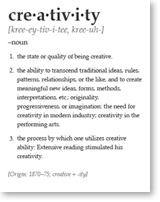 Some people are more prolific with their creative endeavors than others, and many talk about setting up their environment in a particular way to allow for creative juices to flow. What we are nurturing is a direct, unimpeded channel between the conscious mind and the unbounded ground state of the mind, at once infinitely silent, and the source of all creative expression. Regular practice of the Transcendental Meditation technique removes the obstacles that prevent the full expression from that infinite creative reservoir. It is no wonder that artists and scientists alike find that the practice of TM brings new vitality to their work, and that communities of meditators have become cradles of creativity
Contacting Gary Kaplan
To contact me regarding Transcendental Meditation and Heart Health, please call
1-800-learntm