Malcolm Payne
PhD BA DipSS
Free
Self-positioning, end-of-life care, policy and you, humanistic social work Expert
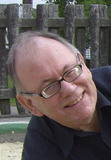
Malcolm Payne Quick Facts
- Main Areas
- End-of-life care, self-positioning, social work
- Best Sellers
- Self-positioning, humanistic social work, social work in end-of-life and palliative care
- Career Focus
- Writer, speaker, policy blogger, educator, social work practitioner
- Affiliation
- St Christopher's Hospice, Opole University, Kingston University, Helsinki University
Self-positioning is a process of thinking through your position in your life history and in relation to the people around you - family, friends and community. Stimuli such as pictures and gentle self-evaluation generate self-reflection, and facilitate engagement with others. It's good when making a life change: starting a course, changing relationships, retirement, a crisis in your life. It's yours to take control of and allow you to take control of your life. I've been working on this in education and helping practice for many years.
End-of-life care is planning in advance for the human experience of approaching the end of your life, or the end-of-life being experienced by someone close to you. There are practicalities and personal and social tasks to complete. You make the choices - with conce and love for others around you. This has been the main focus of my practice for the last eight years.
Policy comes from governments, big organisations and affects you. It means that people in organisations and social structures plan and act consistently to pursue their objectives. Perhaps their aims are not yours, but where you want to go gets mixed up with their acts. How can you influence policy? How can you participate? How can you meet your needs when policy is against you? I have worked on policy on social affairs for the whole of my adult life.
Humanistic social work claims that core ideas in social work come from the humanism that believes that human minds and skills can overcome any problem, humanistic psychologies and psychotherapies that build the capacity to live with others on our understanding of our selves and commitment to human rights. It has been central to my practice, but I have recently begun to explore and clarify my thoughts.
Malcolm Payne Books
Articles by this expert
SelfGrowth articles and saved writing connected to this expert.
Article
Oppis – Opportunities in self-positioning
Oppis are a central feature of self-positioning. Oppis are opportunities. An opportunity is just that: a chance you can take, or not, as you wish. It is offered to you alongside many other opportunities: you take up the ones that are relevant to you, miss out on those that do not seem right for you at the moment. An oppi may not seem right for you now, but you may remember it, and come back to it. Or another one may come along that comes at the same issue from a different angle and appeals to you more.
Recently added
Article
The four human tasks of dying - communication
The founder of the Hospice movement, Dame Cicely Saunders, identified four important human tasks that people want to complete during the process of dying. They are: • To say ‘goodbye’ – to people, animals and things that have been important to them • To say ‘thank you’ – for a life together, for help and care provided, perhaps particularly in this last period when extra care has very often been needed. • To say ‘sorry’ – perhaps for failings or slights or demands, or especially for being difficult to live with, in the last illness. • To say ‘I love you’.r
Recently added
Article
Making psychological space in self-positioning
Perhaps you say: ‘Give me some space to think about that’. Or: ‘I need a breathing space before I can take that on’. So space is very important to us. But how can we understand that need for space? And what can we do to get it? This is an important part of self-positioning – it aims to ‘position’ us as we are now in relation to our past and future and in relation to other people, so the space we occupy is a crucial part of this. Perhaps you have failed an exam, or lost a job. Perhaps your child or your partner has left you.
Recently added
Article
The four human tasks of dying – the dying person and their loved ones
The founder of the Hospice movement, Dame Cicely Saunders, identified four important human tasks that people want to complete during the process of dying. They are: • To say ‘goodbye’ – to people, animals and things that have been important to them • To say ‘thank you’ – for a life together, for help and care provided, perhaps particularly in this last period when extra care has very often been needed. • To say ‘sorry’ – perhaps for failings or slights or demands, or especially for being difficult to live with, in the last illness. • To say ‘I love you’.
Recently added
Article
What is self-positioning?
Self-positioning is a process for personal self-reflection; you can do it on your own, as a personal development exercise, or with a group of people who agree to work with you for the mutual benefit of all of you. It is based on the psychology of social skills development.
Recently added
Article
Why is self-positioning about self?
Some people who come across self-positioning ask: why is it about your ‘self’? Isn’t that selfish, self-interested, self-absorbed? Shouldn’t we be thinking about others, outward-looking, rather than concentrating on ourselves?r
Recently added
Websites & resources
SelfGrowth-published websites, downloads, and contributor profile websites connected to this expert.
Favorite Quotes & Thoughts from Malcolm Payne
Loving well takes you to a beautiful place and loving long is a melody playing through your life. - Malcolm Payne
Contacting Malcolm Payne
How to get started
On self-positioning, you can get a daily feed of a picture, some gentle self-reflective questions and some thoughts: http://self-positioning.tumblr.com/
On end-of-life care and various aspects of social work, read my regularly updated blogs:
Social work and end-of-life care (http://sweol.wordpress.com/), Greyamble, on social work and care for older people (http://greyamble.blogspot.co.uk/) Social work around the world (http://intsw.blogspot.co.uk/) and Big Society, social and community work (http://bigsoccommsw.blogspot.co.uk/).