Marilyn Manning
Ph.D., CMC, CSP
Free
Leadership, Communications, Team Dynamics, Mediation, Facilitation, Executive Coaching, Organizational and Personal Change, and Conflict and Stress Management Expert
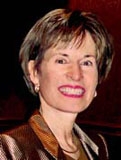
Marilyn Manning Quick Facts
- Main Areas
- Dr. Marilyn Manning. The Consulting Team is a recognized expert in many areas including communication, training, facilitation, coaching, leadership development, change, conflict mediation, strategic planning, and team building.
- Best Sellers
- Authored seven business books, which have been published in eight languages, and over 100 articles.
- Career Focus
- Over the last 20 years, Dr. Marilyn Manning has brought expedient solutions to complex people and team problems. She successfully integrates her personal philosophy with the challenges and needs of the business community.
- Affiliation
- Marilyn is the CEO of her own business, The Consulting Team. She is one of only 17 international speakers holding both certified management consultant (CMC) and certified speaking professional (CSP) designations. Member of NSA and IMC USA.
Marilyn Manning, Ph.D., delivers high content, high-energy presentations. She is the founder and CEO of The Consulting Team, LLC, an organizational and management consulting firm. As a conflict mediator for 20 years, she brings expedient solutions to complex people and team problems. She successfully integrates her personal philosophy with the challenges and needs of the business community. Her interactive speaking style is uniquely educational and motivational.
She is one of only twenty speakers holding both Certified Speaking Professional and Certified Management Consultant designations. CMC (Certified Management Consultant) is a certification mark awarded by the Institute of Management Consultants USA and represents evidence of the highest standards of consulting and adherence to the ethical canons of the profession. Less than 1% of all consultants have achieved this level of performance.
She has delivered over 1000 speeches to more than 400 clients. Her topics of expertise include Leadership, Communications, Team Dynamics, Mediation, Facilitation, Executive Coaching, Organizational and Personal Change, and Conflict and Stress Management. She has successfully applied her practical experience and research of organizational psychology into her seven business books and over one hundred articles, which have been published in eight languages.
Dr. Manning’s expertise in organizational change was highlighted when General Electric hired her for two years as a facilitator in Jack Welch’s Work-Out re-engineering initiative. She was also on Symantec’s international leadership team for their change and customer-focus initiatives.
Over 94% of Marilyn’s engagements are repeat clients. Her clients include Johnson and Johnson, Stanford University and Hospital, GM, United Airlines, Sales and Marketing Executives, Packard Foundation, government agencies, Good Will, Lucent, National Semiconductor, AT&T. She is a lecturer at several Stanford University Leadership Forums.
Dr. Manning has served as the president of the largest chapter of the National Speakers Association, and served as the Chair of the Board of Trustees for the Institute of Transpersonal Psychology from 2004-2008.
She has extensive experience working internationally. She has worked for the Malaysian Prime Minister's Cabinet, IBL shipping company in Mauritius, Symantec in Europe and Canada, and American Standard in Mexico. She has also worked in London, Borneo, South Africa, and Puerto Rico, utilizing her synthesis of organizational psychology and value-based leadership.
Articles by this expert
SelfGrowth articles and saved writing connected to this expert.
Article
Service Begins At Home
Service is not just a smile or pleasant tone of voice. Authentic service is ethical, value based and practiced all the time. Our values may include integrity, accountability, quality, collaboration and teamwork. A value may be defined as "that which is important to someone and which affects the ...
Recently added
Article
How Agreements Help The Bottom Line
Our leaders, managers, teams and organizations could benefit from developing a behavioral protocol, or a code of behavior or ethics based on agreed upon values. You may try this on your own, or have a facilitated off-site meeting to really dig into the issues. A code or protocol helps establish ...
Recently added
Article
How Agreements Help the Bottom Line
Every company should develop a code of ethics based on agreed upon values. Our leaders, managers, teams and organizations could benefit from developing a behavioral protocol, or a code of behavior or ethics based on agreed upon values. You may try this on your own, or have a facilitated off-site ...
Recently added
Article
Service Begins at Home
Effective managers have a strong sense of purpose and ethics for themselves and for their organizations. A code on ethics can help establish mutually beneficial systems of conduct between management and employees, and between the company and its customers and vendors. A system of ethics provides ...
Recently added
Article
My Way or the Highway
It can be very challenging and discouraging to support someone else’s ideas, especially when we think our way is the best. There’s a lot of emphasis on being a good team player for top leaders, managers and front line folks. Can we use values and a protocol to make teams and leaders ...
Recently added
Article
My Way Or The Highway
It can be very challenging and discouraging to support someone else’s ideas, especially when we think our way is the best. There’s a lot of emphasis on being a good team player for top leaders, managers and front line folks. Can we use values and a protocol to make teams and leaders work better? ...
Recently added
Article
Position Yourself Strategically: Have a Clear Vision, Values and Mission
All successful entrepreneurs have a vision for their businesses. When you have a clear vision for your organization or business, you can work backward, identifying what you need to ensure success. Identifying Your Vision, Values, and Missio Vision. For many, the visioning process is random ...
Recently added
Article
The Seven Laws Of Success
There are four main reasons why people fail to succeed: negative attitudes, procrastination, ignorance about success principles, failure to write down goals, and fear of change. By applying the Seven Laws below you can develop your own success structure. Clearing Nature abhors a vacuum. When ...
Recently added
Websites & resources
SelfGrowth-published websites, downloads, and contributor profile websites connected to this expert.