Tad Waddington
PhD
Free
Success Principles Expert
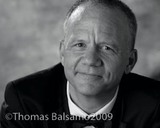
Tad Waddington Quick Facts
- Main Areas
- The strategy of leaving a legacy
- Best Sellers
- Lasting Contribution: How to Think, Plan, and Act to Accomplish Meaningful Work
- Career Focus
- Author, Speaker
- Affiliation
- Lasting Contribution
Winner of an International Business Award for Best HR Executive of the year and of a World HRD Award for HR Leadership,Tad Waddington is Director of Performance Measurement for Accenture. He received his PhD in Measurement, Evaluation, and Statistical Analysis from the University of Chicago. He is the coauthor of Return on Learning: Training for High Performance at Accenture and the author of Lasting Contribution: How to Think, Plan, and Act to Accomplish Meaningful Work, which has won six prestigious awards. Fluent in Chinese, he is a Global Senior Advisor to the Asia-Pacific CEO Association Worldwide. Additionally, he sits on three boards on three continents.
Free Articles & Book Excerpts
Free Audio & Video Samples
Tad Waddington Audio & Video Programs
Tad Waddington Books
Articles by this expert
SelfGrowth articles and saved writing connected to this expert. Showing 12 of 27.
Article
Build a Mistake Hierarchy
Magicians provide an excellent example of a ‘mistake hierarchy.’ A good card magician knows that many tricks depend on luck and that luck is a fickle friend. So, you tell the audience you’re going to do a trick. Without telling them what kind of trick, you go for the ...
Recently added
Article
Ease The Load
While it is true that there are many tricks for improving memory, it is also true that there are many ways to avoid needing to rely on your memory. • Leave written reminders for yourself in places that you pass throughout the day. A sticky note on your desk phone could help you remember to ...
Recently added
Article
Appreciate Your Fallibility
Notice how often people distrust their memories, but not their judgment. Psychologists have developed thousands of experiments that demonstrate just how poor we are at making judgments, judgments of any kind – moral, business, even perceptual. You can get people to misjudge the length ...
Recently added
Article
Truth vs. Meaning
The mathematicia Benoit Mandelbrot asked a deceptively simple question: How long is the coast of Britain? The answer depends on how you measure it. You get a much shorter distance if you fly from one end to the other than if you drive a road that follows the island’s contours. The road gives a ...
Recently added
Article
If You Can’t Remember, Try It Doing It Anyway
You have probably had the experience of not being able to tell somebody a phone number until you dialed it. Or perhaps you have given poor directions to a place you can easily drive to. This happens because we are able to remember procedures and tasks better than specific step-by-step ...
Recently added
Article
Learn Key Concepts
Efficiency: Getting things done right. Effectiveness: Getting the right things done. Capital intensive: Requiring lots of money to accomplish. Labor intensive: Requiring lots of work to accomplish. Quality: Not what you put into a thing; what somebody else gets out of it. Emergency: A time ...
Recently added
Article
Words and Perceiving
People do not perceive primarily with their senses, but with their minds. Psychologist Egon Brunswik and others have shown that people often don’t see a thing unless they have some idea of what they are looking for. The reason for this may be biological. In On Intelligence, Jeff Hawkins and ...
Recently added
Article
Mix It Up
When studying a variety of subjects or working on a variety of projects, it is more difficult to do similar things right after each other than dissimilar things. Huh? For example, don’t study English then your foreign language then math then science. Instead, study English, then math, then the ...
Recently added
Article
Definitions: Genius, Constitutive Rules
Genius William James maintained, “Genius, in truth, means little more than the faculty of perceiving in an unhabitual way.” People like you and me do not achieve this through mental power, but through knowledge and practice. For example, people could have made gliders hundreds of years earlier ...
Recently added
Article
Test, Retest
People often study as subject until they can get 100% right on a test of their understanding of the subject. While this is a sensible approach, it turns out that about 10% of the correct answers is composed of guesswork, short-term memory, and information not fully learned. The best approach is ...
Recently added
Article
On Mastery
There is a notion in Japanese that if you are a master of one thing, then you are master of all things. The idea goes back to the thirteenth century where in Rinzai Zen monasteries you sought enlightenment by meditating on koans. A koan is, “a succinct paradoxical statement or question used as ...
Recently added
Article
Complexity in Action
H. L. Mencken said, “For every complex problem there is a solution that is simple, straightforward, and wrong.” How do you solve complex problems? Sometimes you can “just do it,” knock down the first domino—which topples the next in a long line of dominoes—and achieve the result you want. More ...
Recently added