5 Must have DevOps Tools For You
Written by Ajay Goyal
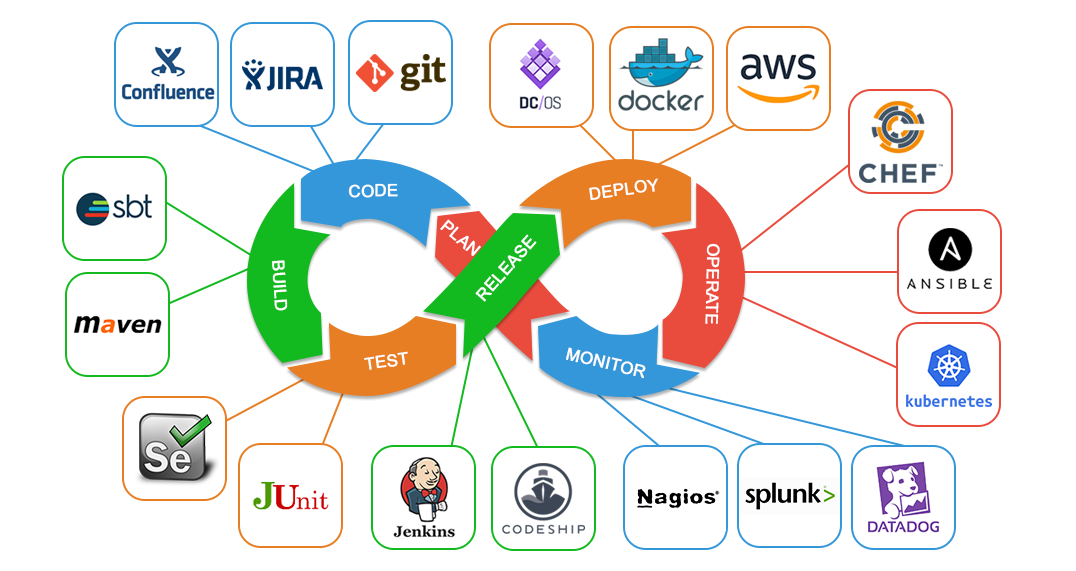 There are a lot many DevOps tools, which can help in the development process.
DevOps tools can broadly be classified in five categories:
There are a lot many DevOps tools, which can help in the development process.
DevOps tools can broadly be classified in five categories:
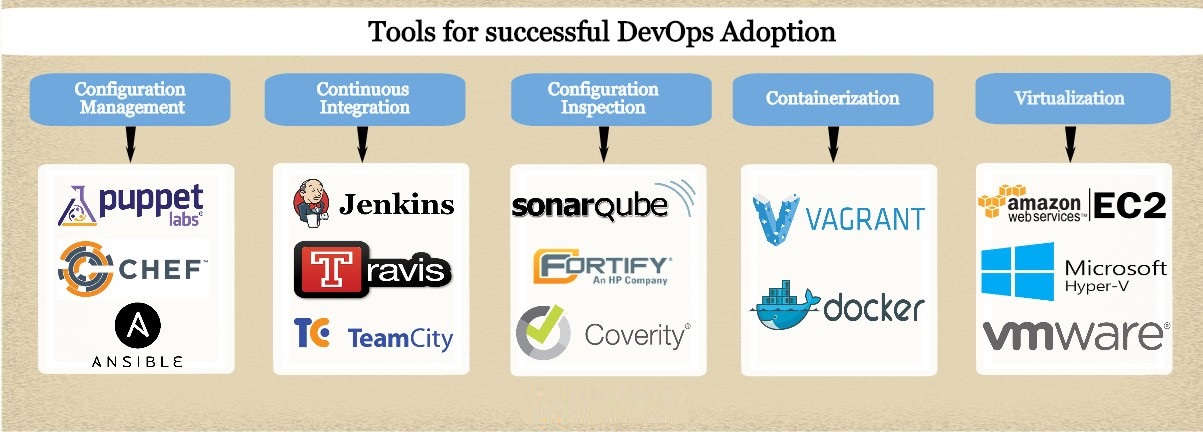 1) Open Source Continuous integration– These DevOps tools are used to automate testing process e.g. Jenkins, Travis, TeamCity. Let us discuss these DevOps tools in details:
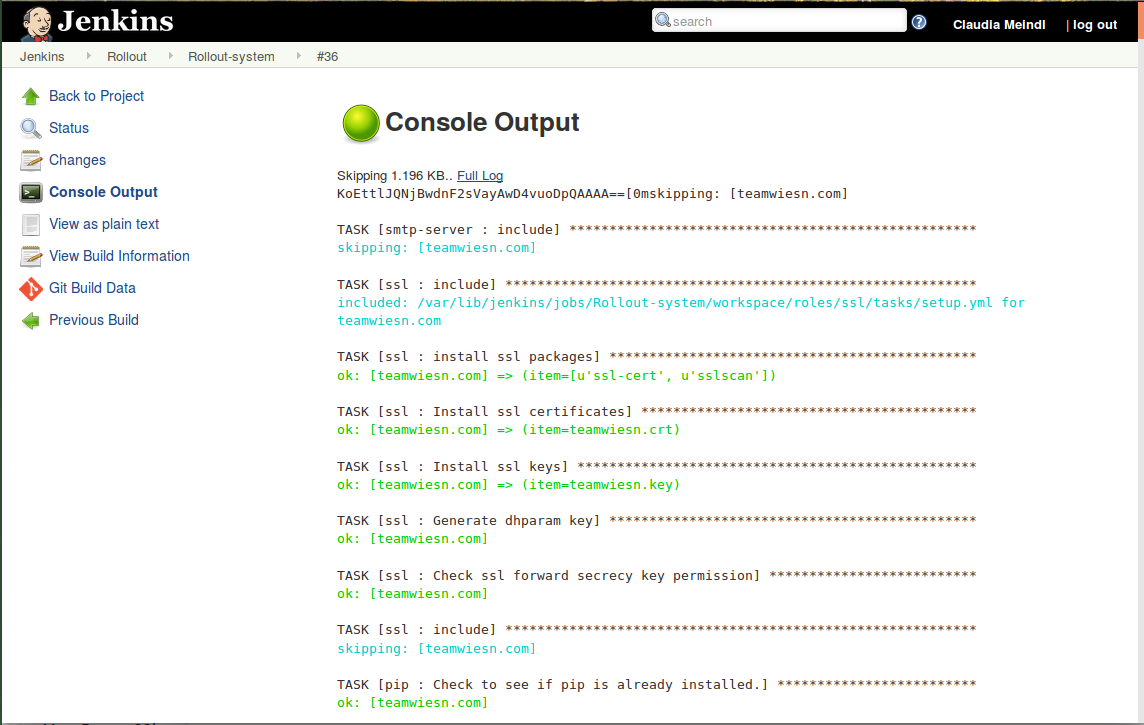
a) Jenkins- It is an open-source automation server, which is written in Java language. Jenkins helps to automate all types of application development processes such as creating code and testing software. It also helps in deployment with a continuous integration server. It also monitors exte
ally-run jobs such as cron jobs and procmail jobs. Jenkins has built-i
GUI tools, which make it easy to use, and provides lots of plugins and add-ons. It is a server-based system and runs in servlet containers like Apache Tomcat.
1) Open Source Continuous integration– These DevOps tools are used to automate testing process e.g. Jenkins, Travis, TeamCity. Let us discuss these DevOps tools in details:
a) Jenkins- It is an open-source automation server, which is written in Java language. Jenkins helps to automate all types of application development processes such as creating code and testing software. It also helps in deployment with a continuous integration server. It also monitors exte
ally-run jobs such as cron jobs and procmail jobs. Jenkins has built-i
GUI tools, which make it easy to use, and provides lots of plugins and add-ons. It is a server-based system and runs in servlet containers like Apache Tomcat.
 b) Travis- Travis CI is an open-source hosted distributed continuous integration service. It is used to build and test projects hosted at GitHub. It automatically detects whenever a commit has been made and pushed to GitHub repository. Once this is done it will automatically try to build and test the project. It can be configured to run tests on different machines.
c) TeamCity- TeamCity is a building management and continuous integration server from JetBrains. It is written in Java. TeamCity is a platform supported in many frameworks and languages. It has somewhere around 100 ready to use plugins for the same. It has various installation packages for different OS.
2) Configuration management tools– These tools are used for tracking and controlling the software changes. These tools keep track of infrastructure components. These components are used to automate and maintain continuous delivery of the product. So, it reduces the effort to manually configure OS, system applications, or server software. Below are the various Configuration management tools discussed in details:
a) Puppet Labs- Puppet is an open source software configuration management tool. It runs on Unix like system and Microsoft Windows alike. Puppet is an extremely powerful tool, which is used for a complete life cycle of a server. It helps in deploying, configuring, managing, maintaining a server machine. It has its own declarative and has powerful reporting tools. These tools provide detailed information as to what changes have been made. It tells you about the behavior of agents.
b) Chef– The chef is a configuration management tool. It deals with a machine set up on physical servers, virtual machines and in the cloud. It is a Ruby-driven platform. It helps to automate building; deploying and management of infrastructure by using short scripts called recipes. There are many companies that are using Chef to manage their infrastructures like Facebook, Etsy, Cheezburger, and Indiegogo.
c) Ansible- Ansible is an open source configuration management, deployment, and orchestration tool. It is built on Python. It is a simple yet powerful tool as it can help in automating multi-tier applications. This tool is more suitable for a larger or more homogeneous infrastructure. Ansible is run even from the command line for simple tasks. You can perform tasks like rebooting of a service, triggering an update or checking whether a service is running. Ansible is much simpler to use compared to Puppet and Chef. It is used mainly for deployment configuration.
3) Containerization tools– They help in improving communication and collaboration between developers and operations teams. some of the examples are Docker and Vagrant.
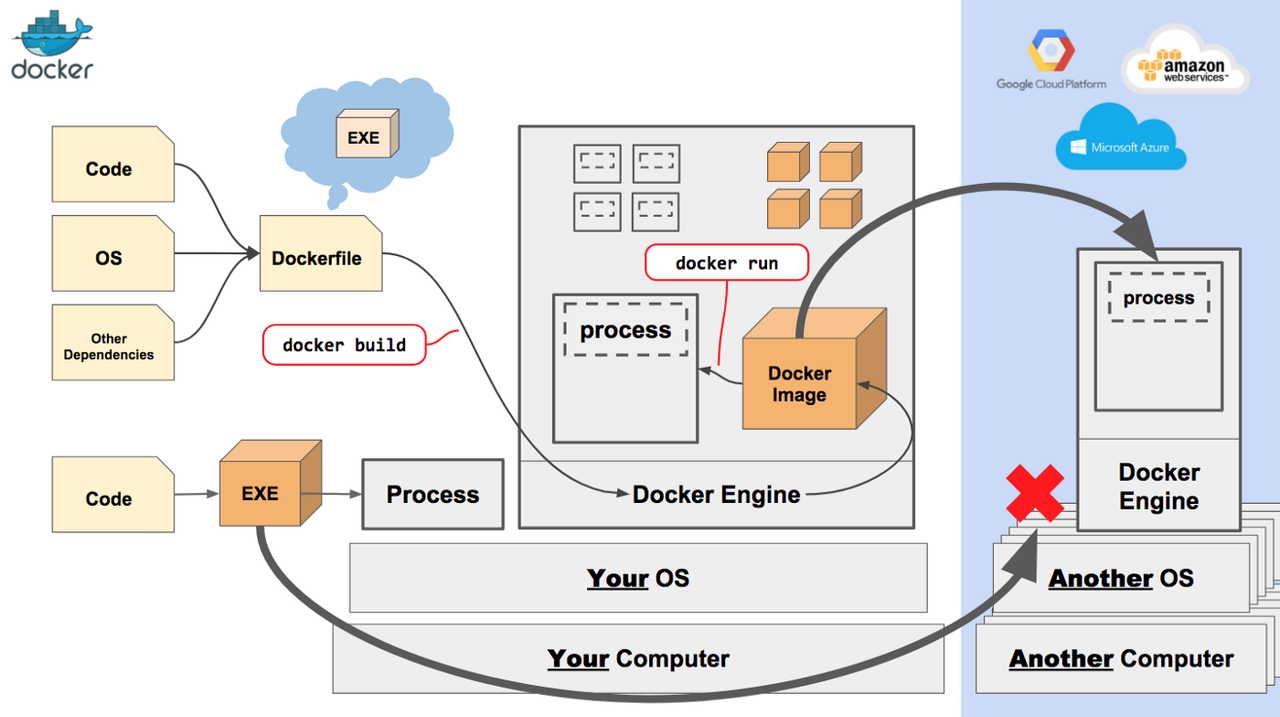
a) Docker– Docker is a container management tool. It is utilized to maintain software components as isolated, self-sufficient containers. It can be deployed and executed in any environment. It reduces the effort of going back and forth between development and operations team in continuous deployment.
So, it saves operation costs. It is used as an open platform. Hence, it becomes easier to push code from development to production environment. Docker uses containerization technology. Here applications run in self-contained units and move across platforms. The development team has the flexibility of using any language or toolchain for coding purpose.
b) Travis- Travis CI is an open-source hosted distributed continuous integration service. It is used to build and test projects hosted at GitHub. It automatically detects whenever a commit has been made and pushed to GitHub repository. Once this is done it will automatically try to build and test the project. It can be configured to run tests on different machines.
c) TeamCity- TeamCity is a building management and continuous integration server from JetBrains. It is written in Java. TeamCity is a platform supported in many frameworks and languages. It has somewhere around 100 ready to use plugins for the same. It has various installation packages for different OS.
2) Configuration management tools– These tools are used for tracking and controlling the software changes. These tools keep track of infrastructure components. These components are used to automate and maintain continuous delivery of the product. So, it reduces the effort to manually configure OS, system applications, or server software. Below are the various Configuration management tools discussed in details:
a) Puppet Labs- Puppet is an open source software configuration management tool. It runs on Unix like system and Microsoft Windows alike. Puppet is an extremely powerful tool, which is used for a complete life cycle of a server. It helps in deploying, configuring, managing, maintaining a server machine. It has its own declarative and has powerful reporting tools. These tools provide detailed information as to what changes have been made. It tells you about the behavior of agents.
b) Chef– The chef is a configuration management tool. It deals with a machine set up on physical servers, virtual machines and in the cloud. It is a Ruby-driven platform. It helps to automate building; deploying and management of infrastructure by using short scripts called recipes. There are many companies that are using Chef to manage their infrastructures like Facebook, Etsy, Cheezburger, and Indiegogo.
c) Ansible- Ansible is an open source configuration management, deployment, and orchestration tool. It is built on Python. It is a simple yet powerful tool as it can help in automating multi-tier applications. This tool is more suitable for a larger or more homogeneous infrastructure. Ansible is run even from the command line for simple tasks. You can perform tasks like rebooting of a service, triggering an update or checking whether a service is running. Ansible is much simpler to use compared to Puppet and Chef. It is used mainly for deployment configuration.
3) Containerization tools– They help in improving communication and collaboration between developers and operations teams. some of the examples are Docker and Vagrant.
a) Docker– Docker is a container management tool. It is utilized to maintain software components as isolated, self-sufficient containers. It can be deployed and executed in any environment. It reduces the effort of going back and forth between development and operations team in continuous deployment.
So, it saves operation costs. It is used as an open platform. Hence, it becomes easier to push code from development to production environment. Docker uses containerization technology. Here applications run in self-contained units and move across platforms. The development team has the flexibility of using any language or toolchain for coding purpose.
 b) Vagrant– Vagrant is an open source software product. It helps in building and maintaining virtual software development environments. It is also known as a Virtual Machine (VM) manager. Some examples of virtual environments are VirtualBox, Hyper-V, Docker containers, VMware, and AWS. It is a tool, which simplifies software configuration management of these VMs. It even helps in scripting and packaging different VM configuration.
4) Continuous Inspection– These DevOps tools help in managing the code quality.
a) Sonarqube– Sonarqube is an open source tool written in Java. It is used to analyze and inspect code quality. It performs automatic reviews and detects defects and security issues. Sonarqube can analyze code in about 20 different programming languages. It provides visual reporting on the project. It helps in replaying past code for analysis of metrics evolution.
b) HP Fortify- HP Fortify Static Code Analyzer (SCA) is another tool. It helps in continuous application scanning. It verifies whether the software written is a trustworthy one, implements secure coding practices. It runs a static code analyzer followed by application development steps. Further, it executes the Selenium scripts as part of testing. HP Fortify scans the source code and identifies the root causes of software security issues. Hence, providing a line–of–code supervision for closing gaps in security.
5) Virtualization– Virtualization is highly important for DevOps. It provides an identical environment to both the development and operations team.
a) Amazon EC2- Amazon Elastic Compute Cloud (Amazon EC2) is a web service. It achieves virtualization by proving secure, resizable computing capacity in the Amazon Web Services (AWS) cloud. Its main purpose is to make web-scale cloud computing easier. By using this web service, it decreases the expenditure costs on hardware product. it also decreases provided configure capacity to its users. Developers and business can virtual servers, configure security and networking and manage storage.
b) VMWare– VMware is another virtualization tool. It is a secondary product of Dell Technologies. It offers cloud computing and platform virtualization software and services. There are lots of products of VMWare, which provides virtualization like vSphere, VMWare’s NSX and SAN. vSphere provides server resources, capacity and performance management capabilities.
These were the best DevOps tools that are currently used by many DevOps teams. The market has numerous such tools, but according to our research, they are the best and easy to use.
b) Vagrant– Vagrant is an open source software product. It helps in building and maintaining virtual software development environments. It is also known as a Virtual Machine (VM) manager. Some examples of virtual environments are VirtualBox, Hyper-V, Docker containers, VMware, and AWS. It is a tool, which simplifies software configuration management of these VMs. It even helps in scripting and packaging different VM configuration.
4) Continuous Inspection– These DevOps tools help in managing the code quality.
a) Sonarqube– Sonarqube is an open source tool written in Java. It is used to analyze and inspect code quality. It performs automatic reviews and detects defects and security issues. Sonarqube can analyze code in about 20 different programming languages. It provides visual reporting on the project. It helps in replaying past code for analysis of metrics evolution.
b) HP Fortify- HP Fortify Static Code Analyzer (SCA) is another tool. It helps in continuous application scanning. It verifies whether the software written is a trustworthy one, implements secure coding practices. It runs a static code analyzer followed by application development steps. Further, it executes the Selenium scripts as part of testing. HP Fortify scans the source code and identifies the root causes of software security issues. Hence, providing a line–of–code supervision for closing gaps in security.
5) Virtualization– Virtualization is highly important for DevOps. It provides an identical environment to both the development and operations team.
a) Amazon EC2- Amazon Elastic Compute Cloud (Amazon EC2) is a web service. It achieves virtualization by proving secure, resizable computing capacity in the Amazon Web Services (AWS) cloud. Its main purpose is to make web-scale cloud computing easier. By using this web service, it decreases the expenditure costs on hardware product. it also decreases provided configure capacity to its users. Developers and business can virtual servers, configure security and networking and manage storage.
b) VMWare– VMware is another virtualization tool. It is a secondary product of Dell Technologies. It offers cloud computing and platform virtualization software and services. There are lots of products of VMWare, which provides virtualization like vSphere, VMWare’s NSX and SAN. vSphere provides server resources, capacity and performance management capabilities.
These were the best DevOps tools that are currently used by many DevOps teams. The market has numerous such tools, but according to our research, they are the best and easy to use.Article author
About the Author
Further reading
Further Reading
Article
What are the Advantages of One-Stop Shopping?
In today's fast-paced world, where time is of the essence, consumers are increasingly seeking ways to simplify their lives. One such trend gaining popularity is the concept of a "One-Stop-Shop." This article explores the advantages of one-stop shopping, highlighting its impact on both businesses and consumers. Introduction A one-stop shop refers to a retail or service outlet that offers a comprehensive range of products or services under a single roof. This convenient approac
January 19, 2024
Article
Email Is Dangerous!
Let's face it! Most of the time, you check email because you're unsure what to do-- or don't want to do what you should do. Years ago, a client told me, "I make lists of things I've already done because it's so much fun to check them off!" Checking email provides the same adrenalin rush. It's addictive! Fixing the problem is simple but not easy: Your email box must always be subordinate to your to-do list. You will improve your productivity dramatically by checking email on
November 15, 2023
Article
Design Your Vision - Optio 3
DEFINE WHAT YOU WANT YOUR SETTING TO BE, EXACTLY This is a valuable exercise and one many people imagine they can easily skip. You may be thinking, “I just want it cleaned up, cleared off, and efficient.” That may be “good enough for now,” but it isn’t the best that is possible. This is the time for total and complete luxurious honesty. Ask yourself, “What setting would encourage me to operate to my highest and best purpose on earth?” What colors, textures, tools, light, a
October 3, 2023
Article
Top Human Resource Management Job Opportunities
A few years ago, the idea of human resource management (HRM) emerged and later developed into the HRM we use today. It currently plays a crucial function in every business, greatly enhancing the success of an organisation. Since organisations now value their human resources, there is a growing need for qualified HR specialists. So, you might be wondering what opportunities this human resource management degree will bring your way. Well, the variety of human resource managemen
August 31, 2023