Fire Evacuation Map Creator
Written by Shohag
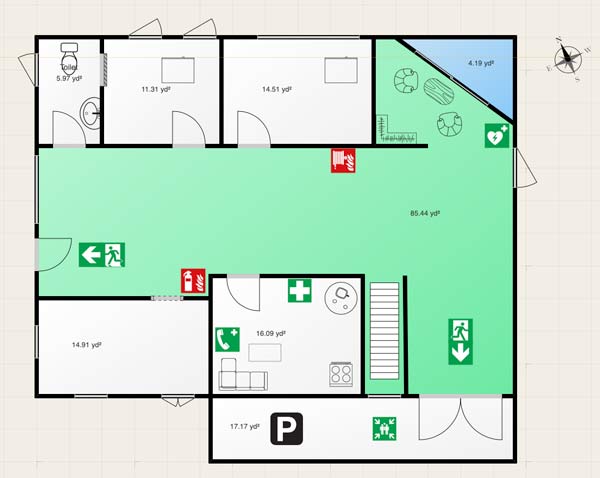 Evacuation maps should be kept simple as too much information can detract from the map's main purpose. Remember that the main purpose of an evacuation map is to instruct people on how to exit a building in the event of a fire. In general, “less is more”.
An evacuation map may also contain some additional information, e.g. B. Protected areas for storms and the location of safety equipment.
You rarely expect an emergency to affect your community, but realistically, a situation can arise at any time. Whether it is a natural disaster or a man-made situation, be prepared with a plan of action that is outlined and practiced beforehand.
An evacuation plan is an essential part of preparing for a wide variety of emergencies your department may face.
The reasons for the evacuation are very different. The situations could include fire, severe weather, violence, hazardous materials, gas leaks, or something else. Since it is impossible to predict what emergency your ministry might face, your evacuation plan should look like this: Simple enough to be completed quickly.
Specific enough to be helpful. Versatile enough to be applied to a wide variety of situations. Evaluate devices and systems. Start by evaluating your equipment and systems to determine whether you have adequate warning and communication tools.
In an emergency, it is important to let people know what is happening. Leadership has to know the situation so that it can steer others properly. In general, people need to know where to go and what to do.
Specifying and using simple keywords like “Code White” for a winter storm or “Code Medical” for an injury or illness can help. These codes and locations can be broadcast through the overhead public address system, walkie talkies, or both.
When identifying codes for specific types of incidents - fire, severe weather, medical material, hazardous material, violence, and so on - you should assign a desired evacuation method. Calling code will let your leadership and others know how to evacuate.
Fire is the most common disaster to which a crisis evacuation plan is applied. However, such a plan should cover every conceivable reason for the evacuation, including bomb hazards, spills, tornadoes, or even seismic tremors.
The Emergency Evacuation Plan seeks to develop a technique that allows workers to leave the site quickly and calmly, thereby minimizing the risk of conceivable injuries.
Evacuation maps should be kept simple as too much information can detract from the map's main purpose. Remember that the main purpose of an evacuation map is to instruct people on how to exit a building in the event of a fire. In general, “less is more”.
An evacuation map may also contain some additional information, e.g. B. Protected areas for storms and the location of safety equipment.
You rarely expect an emergency to affect your community, but realistically, a situation can arise at any time. Whether it is a natural disaster or a man-made situation, be prepared with a plan of action that is outlined and practiced beforehand.
An evacuation plan is an essential part of preparing for a wide variety of emergencies your department may face.
The reasons for the evacuation are very different. The situations could include fire, severe weather, violence, hazardous materials, gas leaks, or something else. Since it is impossible to predict what emergency your ministry might face, your evacuation plan should look like this: Simple enough to be completed quickly.
Specific enough to be helpful. Versatile enough to be applied to a wide variety of situations. Evaluate devices and systems. Start by evaluating your equipment and systems to determine whether you have adequate warning and communication tools.
In an emergency, it is important to let people know what is happening. Leadership has to know the situation so that it can steer others properly. In general, people need to know where to go and what to do.
Specifying and using simple keywords like “Code White” for a winter storm or “Code Medical” for an injury or illness can help. These codes and locations can be broadcast through the overhead public address system, walkie talkies, or both.
When identifying codes for specific types of incidents - fire, severe weather, medical material, hazardous material, violence, and so on - you should assign a desired evacuation method. Calling code will let your leadership and others know how to evacuate.
Fire is the most common disaster to which a crisis evacuation plan is applied. However, such a plan should cover every conceivable reason for the evacuation, including bomb hazards, spills, tornadoes, or even seismic tremors.
The Emergency Evacuation Plan seeks to develop a technique that allows workers to leave the site quickly and calmly, thereby minimizing the risk of conceivable injuries.
 Since a constant readiness to debacle is essential, all representatives should be informed, trained, and guided through evacuation wells to ensure that the process can continue smoothly in the event of a real crisis.
Any emergency evacuation plan must be designed to fully comply with relevant needs and regulations.
The evacuation plan is just one item in your emergency toolkit. Important as it is, your emergency preparedness cannot stop there. The Evacuation-planer.com online safety library provides more information on preparing your church for emergencies and disasters.
Since a constant readiness to debacle is essential, all representatives should be informed, trained, and guided through evacuation wells to ensure that the process can continue smoothly in the event of a real crisis.
Any emergency evacuation plan must be designed to fully comply with relevant needs and regulations.
The evacuation plan is just one item in your emergency toolkit. Important as it is, your emergency preparedness cannot stop there. The Evacuation-planer.com online safety library provides more information on preparing your church for emergencies and disasters.Article author
About the Author
Draw fire escape plans, emergency evacuation maps, and fire exit plans using https://evacuation-planner.com/
Further reading
Further Reading
Article
Why an Outdoor Kitchen is the Ultimate Addition to Your Home
In recent years, outside living areas have gained significant recognition, and one of the most sought-after capabilities is the outdoor kitchen. More than just a present-day addition, an outdoor kitchen offers advantages that beautify the value, functionality, and enjoyment of your property. Whether you like web hosting barbecues, prefer a brand new way to entertain visitors, or sincerely need to spend extra time outside, an outside kitchen may be a transformative upgrade. Th
July 31, 2024
Article
Top Modular Wardrobe Manufacturers in Gurgaon: A Comprehensive Guide
In recent years, modular wardrobes have become an essential part of modern homes, providing a perfect blend of aesthetics and functionality. If you're looking to revamp your storage solutions with sleek and efficient designs, Gurgaon is home to some of the best modular wardrobe manufacturers. This guide will help you explore the top modular wardrobe manufacturers in Gurgaon , highlighting their offerings, services, and what makes them stand out. The Advantages of Modular War
July 19, 2024
Article
Sydney Drink Driving Lawyers
A night out in Sydney can sometimes end unexpectedly with flashing lights in your rearview mirror and a breathalyser waiting by your side. Drink driving is a serious offence in New South Wales, and the penalties can have long-lasting effects on an individual's personal and professional life. Navigating the legal repercussions calls for expert advice, which is why enlisting the assistance of proficient Sydney drink driving lawyers is imperative. Understanding the Severity of D
June 4, 2024
Article
Can a White Ceiling Fan With Light Help Your Home?
How a White Ceiling Fan With Light Can Improve Your Home You know how on a hot summer day, you just can't seem to cool down no matter how low you turn the AC? Or how about when you're sitting in your favorite chair trying to read at night, but that dinky little lamp just doesn't provide enough light? We feel your pain. The truth is, a plain old ceiling fan or basic overhead lighting just doesn't always cut it. But have no fear - there's a simple solution that can help with bo
May 31, 2024