Year-end Financial Planning Tips: Moves You Need to Make Before December 30
Written by Barry Glassman, CFP®
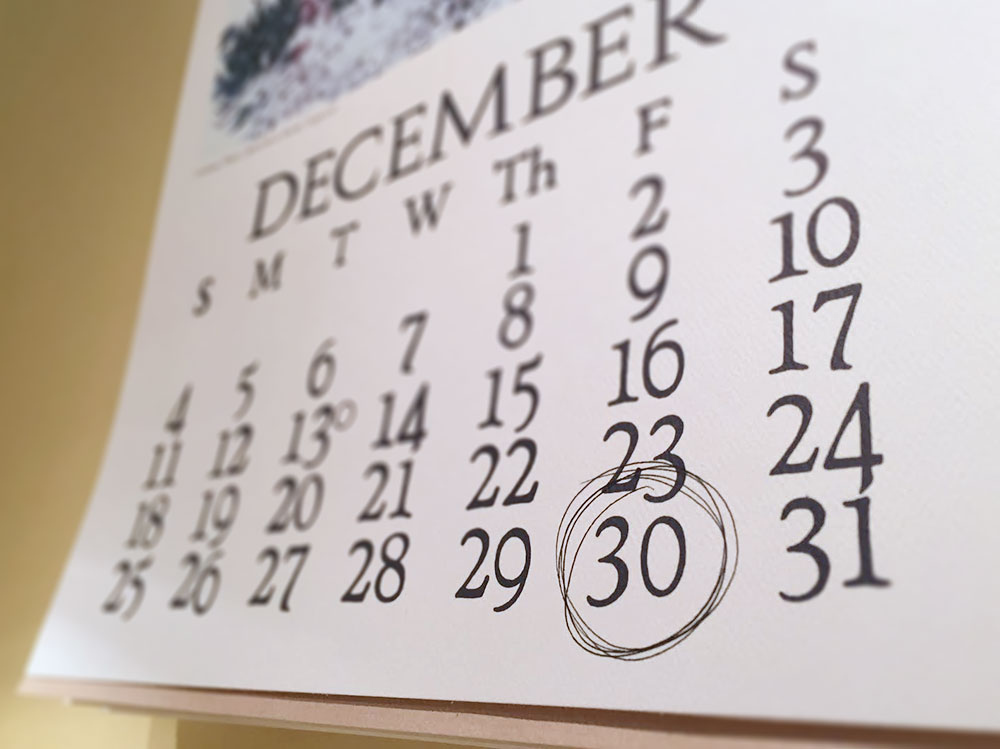
2016 is almost over and many investors are often asking us about year end financial planning tips they should take advantage of before the end of the year. 2016 in particular offers a big opportunity to look over your finances, do something that could lower your taxes, and put more money in your pocket before opportunities go away at the end of the year. Plus, with a new administration coming to DC in January, some of these opportunities may not last as long as others. There are some simple tips steps you can take right away. Others may require the expertise of a financial advisor or accountant, but their advice may be worthwhile if it lowers your tax bill.
Set up a donor-advised fund
You have until the end of the year to make charitable contributions that you can deduct on your tax return. Instead of spreading out your charitable gifts over future years, consider setting up a donor-advised fund this year and sending checks to your favorite charity at a later date. If tax rates go lower in 2017, this may be a huge opportunity to front-load your charitable deduction and take a higher tax deduction this year. Read: Donor-Advised Fund: The Top Tax Move to Make This YearMake your state income tax quarterly payment
If you’re writing checks for your estimated tax payments, be sure to get your fourth quarter state tax payment in before Dec. 30. (Remember: the 31st is a Saturday this year.) This allows you to take the deduction on your 2016 tax return as opposed to waiting until 2017 if you had paid it in January. This “pay ahead” strategy makes even more sense if 1) tax rates are lower next year under a Trump administration, or 2) you had higher income than normal this year. Read: The Best Tax Strategies for a Windfall YearRealize capital losses or capital gains
If any of your investments have done poorly, talk to your accountant about realizing losses. This can be a great tool to offset future capital gains as well potentially reduce your ordinary income by $3,000 a year until the losses are used up. If tax rates go lower next year, it may be even more important to minimize your taxable income in 2016. On the opposite side of the coin, if you’re temporarily in a lower tax bracket now, consider realizing capital gains. This lets you lock in gains while potentially paying less in taxes.Adjust your tax withholding
Think back over the past year: If you got married, divorced or had a child, chances are you’ll need to adjust your withholding on your W-4. Talk to your CPA so that you don’t end up giving the government an interest-free loan or worse, owing a penalty for not paying enough tax over the course of the year. We recently spoke to a client who paid a tax penalty last year solely because he didn’t withhold enough from his paycheck. Don’t make the same mistake.Contribute to retirement
In 2016, the maximum you may contribute is $18,000 to a 401(k), TSP, 403(b), or 457 retirement plan (assuming you earned that much). Plus, if you’re over 50, you can contribute an extra $6,000. You have until Dec. 30 to max out your plan and receive the benefit of deferring your income. If you’re contributing to a Roth 401(k), you have the same contribution limits, but you’ll pay taxes on your contributions now so that all growth in the account grows tax-free. If you are self-employed, consider opening up an Individual K, which is essentially a personal 401k and profit-sharing plan for those who are self-employed. For 2016, the maximum elective deferral is $53,000, or $59,000 if you are over 50. Bankrate.com has a great Self-Employed 401k Calculator to help you know how much you can contribute. If you’re considering delaying retirement savings until next year, keep in mind that tax rates may go lower under a Trump administration. So it may make sense to defer as much income as possible this year.Talk to your CPA about a Roth conversion
If you had a year with less income than usual, consider a Roth conversion. Even though tax rates could go lower under a Trump administration, you still could be in a much lower tax bracket if you’re between jobs or earned less income than usual. If you’re going to be in a lower-than-usual tax bracket this year, it may make sense to pay taxes on your retirement savings now and convert them to a Roth IRA. That way, you avoid paying a higher tax rate at a later date. The 5 toughest questions you should be asking your financial advisor this quarter.Article author
About the Author
Barry Glassman is the founder and president of Glassman Wealth Services®, LLC. His vision for starting GWS was to deliver investment strategies and wealth management services typically available at the highest levels of wealth. Today, clients benefit from these sophisticated financial services targeted to meet their unique needs.
Along with the firm’s Chief Investment Officer, Barry leads a team of investment specialists that create asset allocation strategies for high-net worth families. They seek out the most attractive and appropriate investment ingredients, and then construct portfolios to meet our clients’ goals from capital preservation and income generation to tax-efficiency and growth.
Barry has been honored with Top Advisor awards from Barron’s, Washingtonian, Washington Business journal, Financial Times, Reuters, Investment News, Institutional Investor, Virginia Business and Registered Rep to name a few.
His thought-leadership is driven by his desire to find new and interesting ways to educate investors. He has created interesting infographics and visuals to help explain complex financial concepts and shares these through his columns at Investment News and Forbes.com.
Barry also provides financial commentary to the media. He has appeared in The Wall Street journal, Washington Post, Money, Business Week, Smart Money, Kiplinger’s Personal Finance, The Associated Press, Bloomberg, National Review, The International Herald Tribune, and USA Today. He has also appeared on several national television programs to include Wall Street Week with Louis Rukeyser, World News Tonight with Peter Jennings, CNBC and Bloomberg News.
A graduate of George Washington University, Barry has, in post graduate work through the College for Financial Planning, achieved his status as a CERTIFIED FINANCIAL PLANNER™ practitioner. He has also earned the Certified Funds Specialist designation. He is an Investment Advisor Representative and has retained the 65 securities registration.
Additionally, Barry is past-Chairman of the National Financial Planning Association’s Tax Sub-Committee and past-president and Chairman of the Financial Planning Association’s National Capital Area Chapter. He served on the Board of Directors of the International Association for Financial Planning for a total of six years.
Further reading
Further Reading
Article
Luxury Living Amidst Nature: Explore Farmhouses in Islamabad
Nestled in the picturesque valleys of the Potohar Plateau, Islamabad is renowned for its natural beauty, lush green landscapes, and serene environment. As the capital city of Pakistan, it offers a unique blend of urban living with a connection to nature that many other cities lack. This harmonious balance has spurred a growing trend among the city's elite and nature lovers to invest in luxurious farmhouses. Farmhouses in Islamabad represent a lifestyle of tranquility, exclusi
September 18, 2024
Article
Tips for Choosing the Best Annuity for Your Needs by Ryan Cicchelli
Annuities can be an incredible asset in getting your monetary future, turning out a consistent revenue stream during retirement. In any case, choosing the right annuity can be a complicated cycle, given the different kinds and highlights accessible. Annuity Specialists Ryan Cicchelli, an accomplished annuity trained professional, offers complete tips to assist you with picking the best annuity for your particular requirements. Figuring out Annuities Prior to plunging into the
May 24, 2024
Article
7 Reasons to Consider Living in an Independent Living Apartment after Retirement
Retirement is all about focusing on yourself. For those seeking a new lifestyle in their golden years, considering an independent living apartment may be the perfect answer. These secure, apartments provide a unique opportunity for seniors to enjoy a safe and independent lifestyle. are looking at retirement living options Retirement Villages on the Lower North Shore , Bougainvillea is the way to go. With a great location and other amenities, and a range of recreational activi
February 20, 2023