Mary Rosendale
CPC, Certified Constructive Living Instructor
Free
Constructive Living Expert
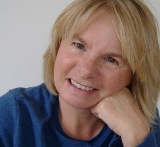
Mary Rosendale Quick Facts
- Main Areas
- Constructive Living,Awareness Coaching,Environmental Design,
- Career Focus
- Author,Coach,Constructive Living Instructor,Business Owner
- Affiliation
- International Coaching Federation
Mary Rosendale is a Writer, Life Coach and Certified Constructive Living Instructor.
Her e-mail class, "Living within your sensory field" has sold out four years in a row. She has written dozens of articles on Constructive Living, overcoming overwhelm, purposeful action, procrastination and shrugging off the tyranny of feelings.
She mentors beginning coaches in the application of Constructive Living techniques to client situations and she regularly leads CL groups and workshops all over Southern Califo ia. She also works one on one with individuals by phone, e-mail and in person.
Her most popular workshop, "S.P.A.C.E.: How to get more of it into your life, your work and your mind." will be available in paperback by Summer 2008.
She is on a mission to raise public awareness of this little known gem of a lifestyle, which is rooted in Zen philosophy. The simplicity and clarity of Constructive Living is sorely needed by busy Western minds.
Articles by this expert
SelfGrowth articles and saved writing connected to this expert.
Article
The Simple Power Of Naikan
Naikan: Ouch. It wasn’t the news anyone would want to hear. My client had been embroiled in major domestic turmoil for weeks. Her husband was uncommunicative and had taken to sitting in front of the TV nursing a bottle of scotch every night. She was on the point of taking the kids and ...
Recently added
Article
Top Ten Things To Build A Bridge And Get Over
1. Nobody knows why anybody does anything. (Imagine the time this one will free up). You don’t need to figure out what happened to Aunt Bertha as a child to make her so mean and crabby; why your spouse dumped you or why your neighbor ignores you. We humans are a product of our ...
Recently added
Article
The Five Biggest Myths About Meditation
1. It’s relaxing. This is a dangerous myth because people expect meditation to be like slipping into a hot tub. When they experience discomfort they think it’s not working or they’re not doing it right and they give up. In fact, it’s often not relaxing, at least not ...
Recently added
Article
Top Ten Things to Build a Bridge and Get Over
God must love Top Ten lists because she made so many of them. They crowd my Inbox daily. They’re right up there in popularity with offers to refinance my house and stock up on Viagra. Top Nine Lists are few and far between and Top Eleven lists unheard of. But for seem reason there seem to be ...
Recently added
Websites & resources
SelfGrowth-published websites, downloads, and contributor profile websites connected to this expert.
Website
The Constructed Life
Life Coaching according to the Eight-Fold Path. An Eastern sensibility for busy Western minds.
December 19, 2008
Website
The Constructed Life
The Constructed Life is a which promotes the principles of Constructive Living, a simple action-oriented lifestyle "operating system", which is rooted in Zen Philosophy and insight meditation. I am one of only about 400 Certified Constructive Living Instructors in the world.
April 7, 2008
Website
The Constructed Life
The Constructed Life offers action-oriented Coaching deeply rooted in Eastern psychology. It combined the principles of Constructive Living with more Western traditional Coaching services. For clearer decision-making, goal-setting, life transitions and implementation of purpose.
September 23, 2007
Favorite Quotes & Thoughts from Mary Rosendale
Constructive Living is a naturalistic “operating system” for your life. It offers a perspective of individuals as basically optimistic, with a natural inclination towards living in a morally responsible manner and an instinctive, constructive drive towards wholeness through purpose-centered action.
To fully appreciate Constructive Living, it is useful to know how it was created.
Dr. David K. Reynolds, a cultural anthropologist, visited Japan in the 1960’s and combined Morita therapy with a Japanese insight meditation, Naikan, to make the uniquely Western amalgam he called Constructive Living.
Morita therapy was developed by Dr. Shoma Morita (1874-1938) one of Japan’s earliest psychiatrists. Although Morita’s early training was in Western psychiatry he found the need to create a protocol for a set of anxiety-related disorders which were particular to his Japanese patients. These disorders ranged from psychosomatic illnesses, to phobias, to obsessive thinking and the like.
Morita moved away from person-centered or cognition-centered therapy to an educational model which cast the patient into the role of student. The successful end result of Morita therapy, therefore, was not that the patient be cured by the therapist, but that the student by re-educated to live in alignment with his instinctive, constructive drive towards wellness.
A Constructive Living Guide or Instructor is generally unconce ed with the causation of unhelpful behaviors. Indeed, introspection to determine the cause of difficulties only encourages the individual to ruminate, develop obsessive thoughts, fuel unhelpful belief systems and develop alte ative realities as to how things are.
Constructive Living generally directs the mind away from the self, and encourages the individual to accept the self and the world just as they are (the Japanese concept of arugamama).
This acceptance is then the basis for determining appropriate action which leads to purpose. The purpose referenced here is purpose with a small p, not a spiritual or religious based Purpose.
You have a purpose for tying your shoes or putting gas in the car and you might also consider that you have a Purpose for being on this Earth. You might consider these to be different purposes, but actually both are manifested through action.
In Constructive Living, feelings are considered a useful source of data. They are also acknowledged to be natural phenomena, like thoughts, which rise and fall outside of our control. Feelings which are not developed will naturally subside; thoughts which are not fueled by rumination or other thoughts will fall away. Other thoughts will, no doubt, arise to take their place.
The Constructive Living approach of living life in an active, purpose-oriented way frees us from the tyranny of feelings. We can feel bad and still take positive steps. We don’t need to allow fear or anxiety to derail us from what needs to be done. We always have control over our behavior regardless of how we feel about a situation.
Our feelings don't need to be fixed. There's nothing wrong with them.
Although Constructive Living is neither religion nor science it is obviously firmly rooted in Zen Philosophy. One does not need to be a Buddhist to appreciate it, nor to practice it.
The other component of Constructive Living, Naikan, was developed by Yoshimoto Ishin (1916-1988). Yoshimoto was a devout Buddhist who practiced insight meditation. He developed Naikan as a vehicle for bringing a modified form of insight meditation to the lay person. Today, Naikan is still immensely popular in Japan, although less well known in the Western world.
The introspective practice of Naikan provides a balance to the response-oriented Morita aspect of Constructive Living.
A traditional practice of Naikan would consist of the practitioner asking herself these three questions:
What have I received from this person?
What have I given to this person?
What troubles/inconvenience have I caused this person?
The object of these three questions could be a spouse, parent, family member, co-worker etc. Most of us walk through our lives unconscious to the ways in which we are supported and cared for by others. We may be quick to pick up on when we feel we are slighted or neglected but we often take for granted the small considerations and gifts given to us by others.
Naikan provides a non-judgmental framework in which we can see the totality of our relationships with others.
In summary, to live in a Constructive Living way one would:
Pay attention to reality.
Accept reality as it is and not as we would like it to be.
Notice and accept our feelings
Be aware that we are not responsible for our feelings and we cannot control them.
Find our purpose
Take whatever appropriate action needs to be taken to reach that purpose.
Repeat.
Contacting Mary Rosendale
The Constructed Life, Inc.
P.O. Box 191464
Los Angeles, Ca. 90019
(562) 394-1899
(805) 617-4139
How to get started
For a more comprehensive introduction to Constructive Living please visit
my website www.TheConstructedLife.com